

How do I regulate my nervous system (according neuroscience)
The truth about how the nervous system regulation works and how you can get a more peaceful, calm, and stable life using neuroscience.

Regulating your nervous system means something completely different to me as a neuroscientist than it does to you.
If you want to actually accomplish what you want, feeling calmer, safer, more stable, more relaxed, less overstimulated, you need to stop thinking in terms of nervous system regulation.
You need to stop thinking in terms of nervous system regulation.
The title of this essay is about how you can regulate your nervous system. To address to that, I’m going to explain to you why I think that concept is actually the problem, even though I think you’re on to something going with this approach. I’m also going to tell you what you need to be focusing on instead to actually achieve your goals. I’m also going to explain how the nervous system actually regulates.
Here’s how I’m going to do it:
Describe how the nervous system actually works
Central Nervous System
Peripheral Nervous System
The Somatic Nervous System
The Autonomic Nervous System
The Sympathetic Nervous System
The Parasympathetic Nervous System
What nervous system dysregulation actually is
What you’re getting right by looking at nervous system regulation content
A better approach
Before we get into it, I’m Emilie. I’m a cognitive neuroscientist with specialties in decision-making and experimentation. I use this education to help women make positive changes in their lives using science and without judgment.

How the nervous system actually works
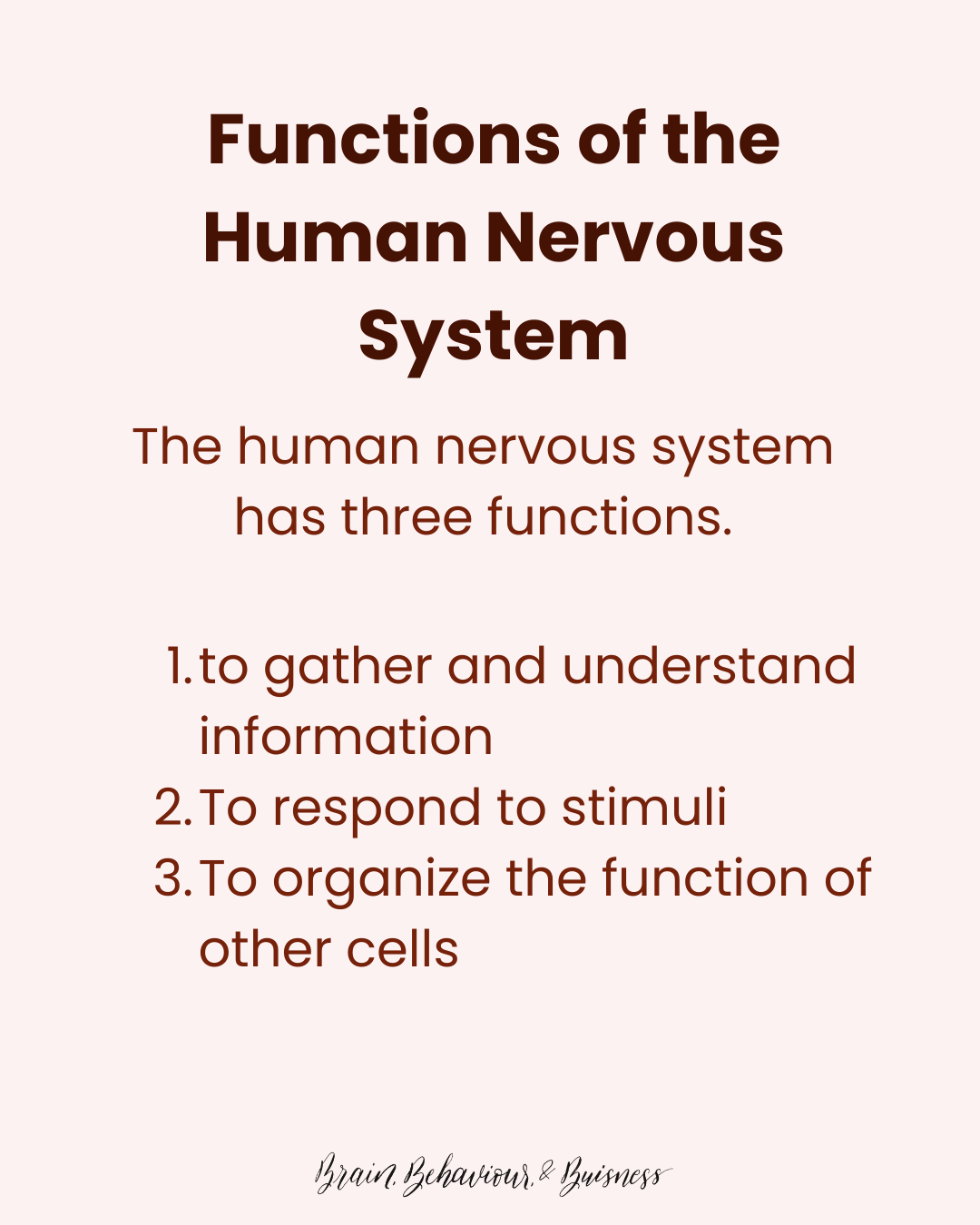
Broadly, the nervous system has 3 functions:
To gather and understand information
To respond to stimuli (meaning changes or interactions with the environment)
To organize the function of other cells
These properties are present in even the most basic nervous systems on the planet, they just vary in their complexity.
The human nervous system is one of the most complicated. To make that more understandable, we break that down into a few categories and subcategories.

The Central Nervous System
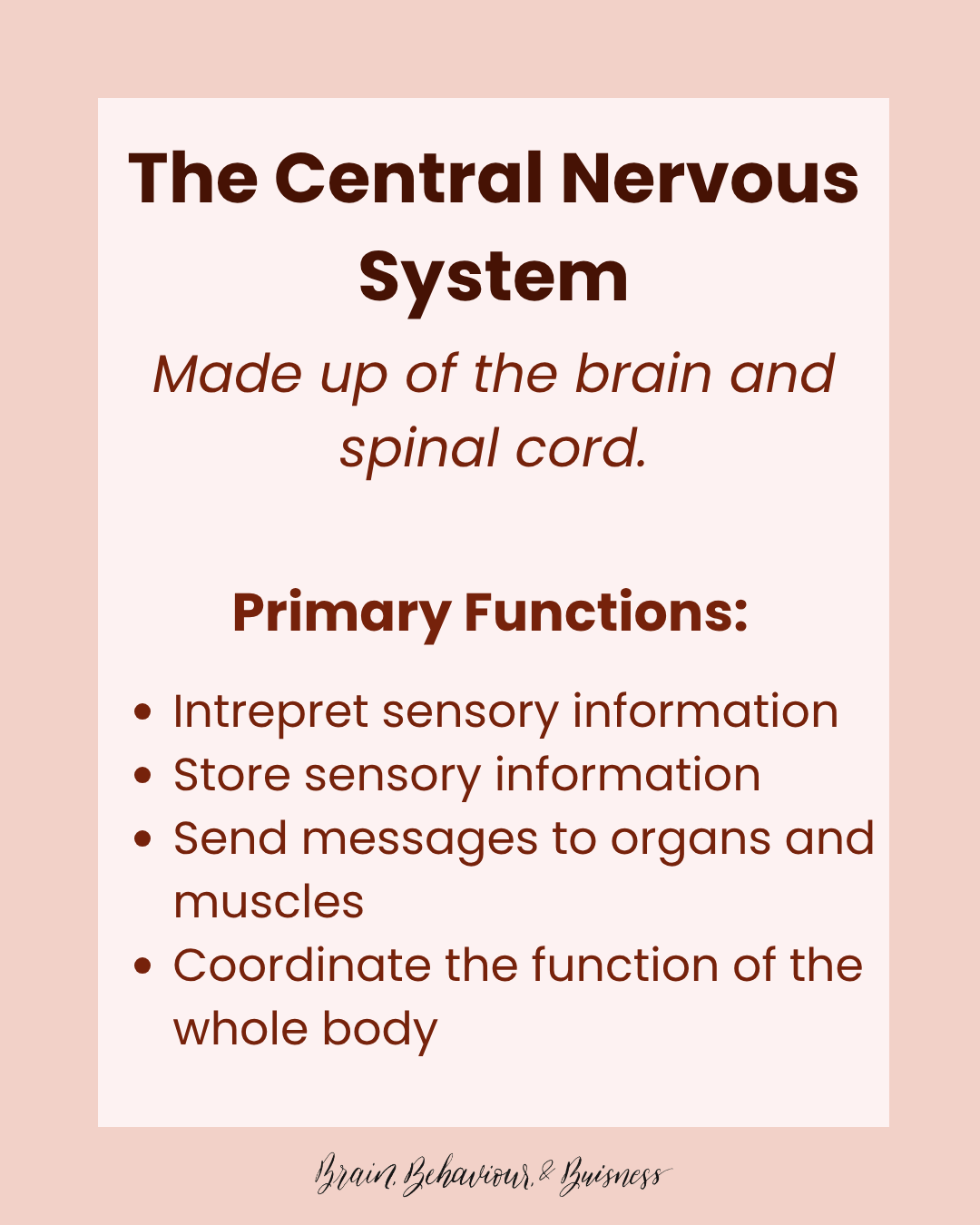
The central nervous system has parts, sort of. These are the brain and spinal cord. Realistically, the spinal cord is an extension of the brain thorough the body.
Two of the central nervous system’s main functions are to store and interpret sensory information. What I mean by this is the classical 5 senses, sight, sound, touch, taste, as well as things like nociception (the feeling of pain). It also monitors and sends messages to other organs, glands, muscles groups, etc. In other words, the brain coordinates the functions of the whole body.
Interestingly, the spinal cord can operate independently in some specific situations. For example, to prevent or minimize burns, the spinal cord can, independently of the brain, cause you to move. These operations are called spinal reflexes. Some of these reflexes can be inhibited by conscious input from the brain.

The Peripheral Nervous System
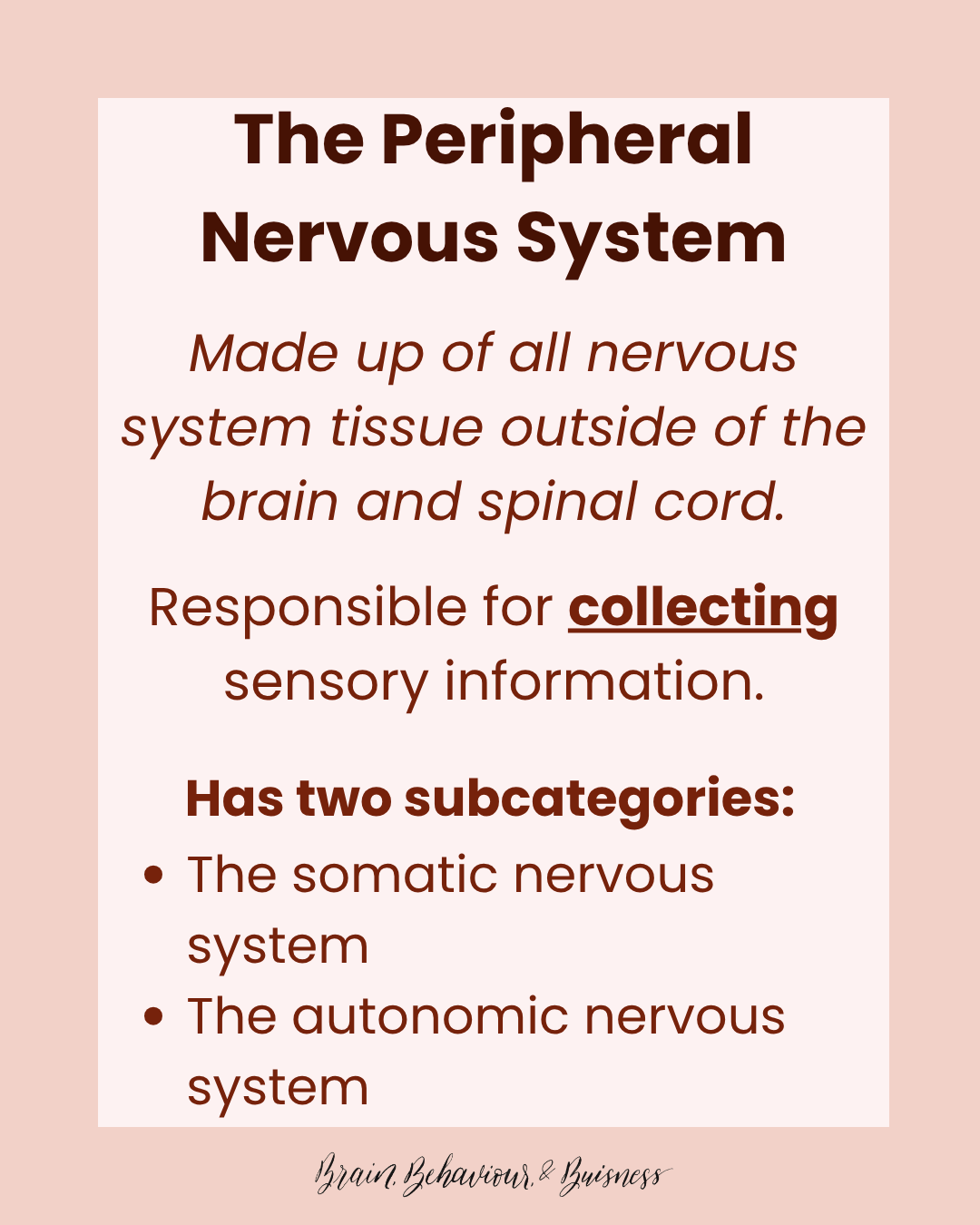
The Peripheral Nervous System is all nervous system tissue that is outside of the brain and spinal cord, or Central Nervous System. For example, the nerves in your skin that perceive touch are part of the Peripheral Nervous System.
This system is responsible for collecting sensory information and sending it to the Central Nervous System for processing.
There are two subcomponents to the Peripheral Nervous System.

The Somatic Nervous System
Depending on your source of information, you may also see this called the skeletal nervous system. My guess is that the term somatic is more familiar.
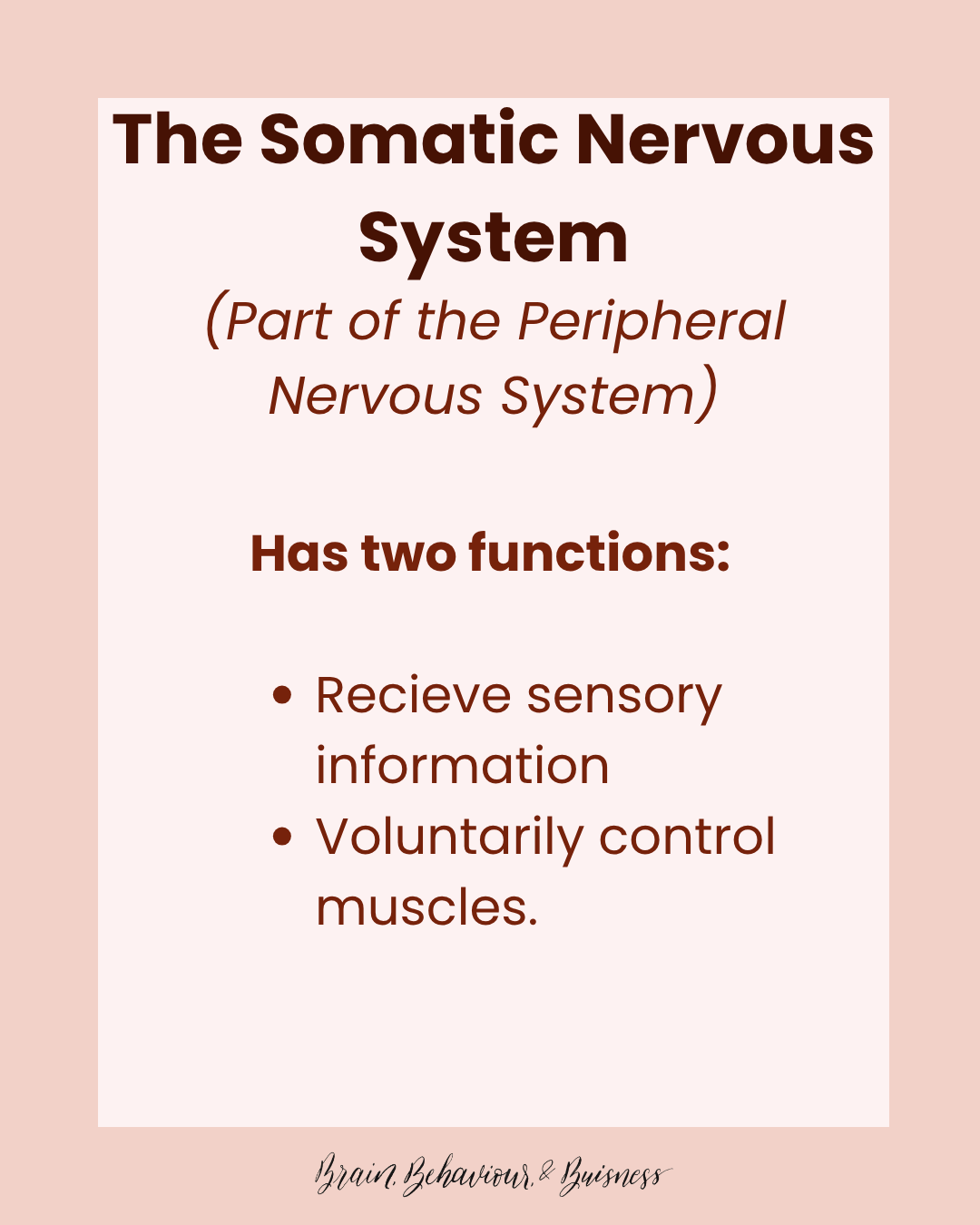
The nerves of the Somatic Nervous System have two functions. The first is to receive sensory information, these are called sensory receptors. The second is to voluntarily control muscles.

The Autonomic Nervous System
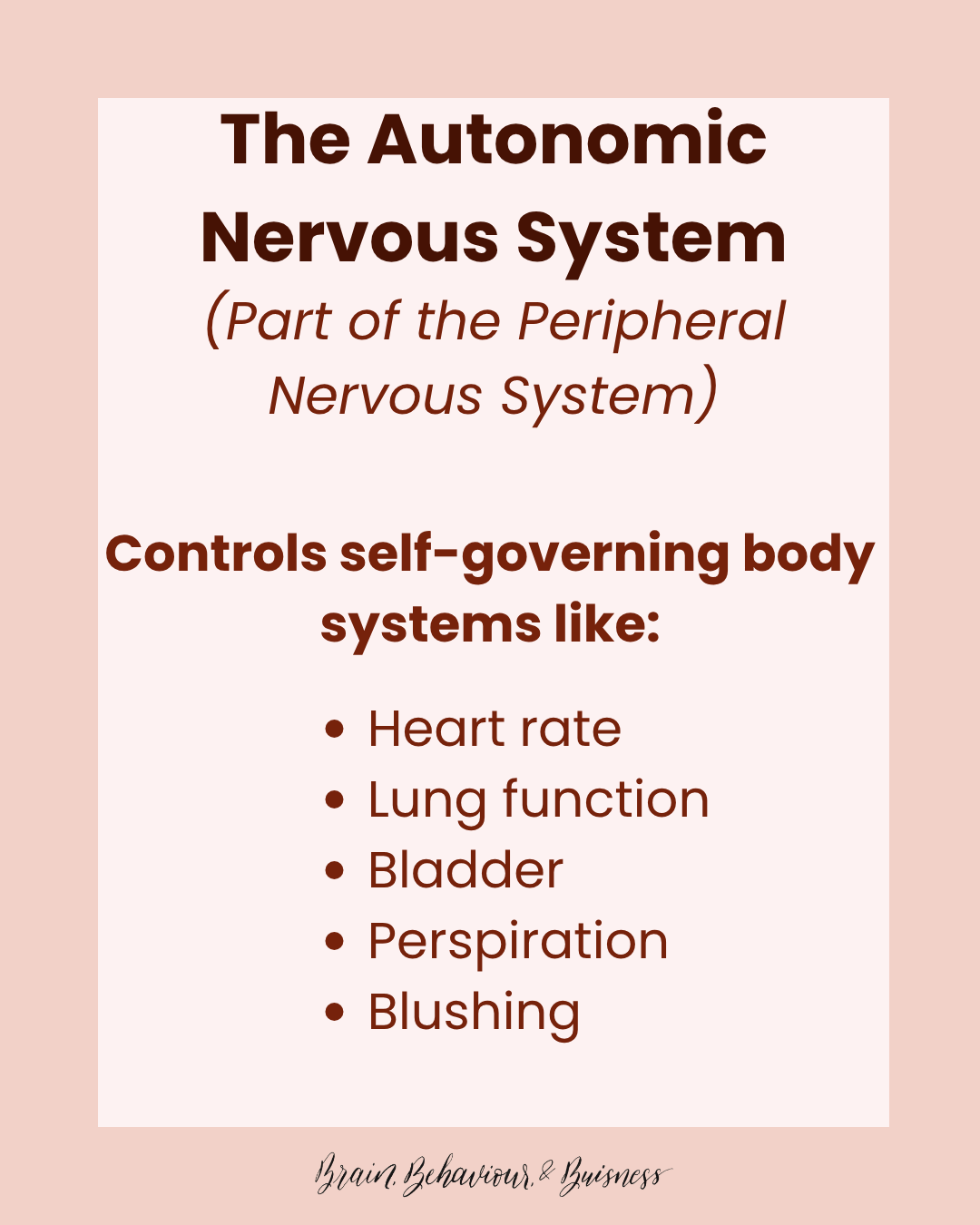
The Autonomic Nervous System is responsible for automatic functions in the body. Specifically, the function of blood vessels, heart, bladder, lungs, etc. You might also here that these nerves are part of the self-governing systems of the body. These systems run independently of conscious thought, even if they can be influenced by it.
The Autonomic Nervous System can be further broken down into two, opposite, subcategories.

The Sympathetic Nervous System
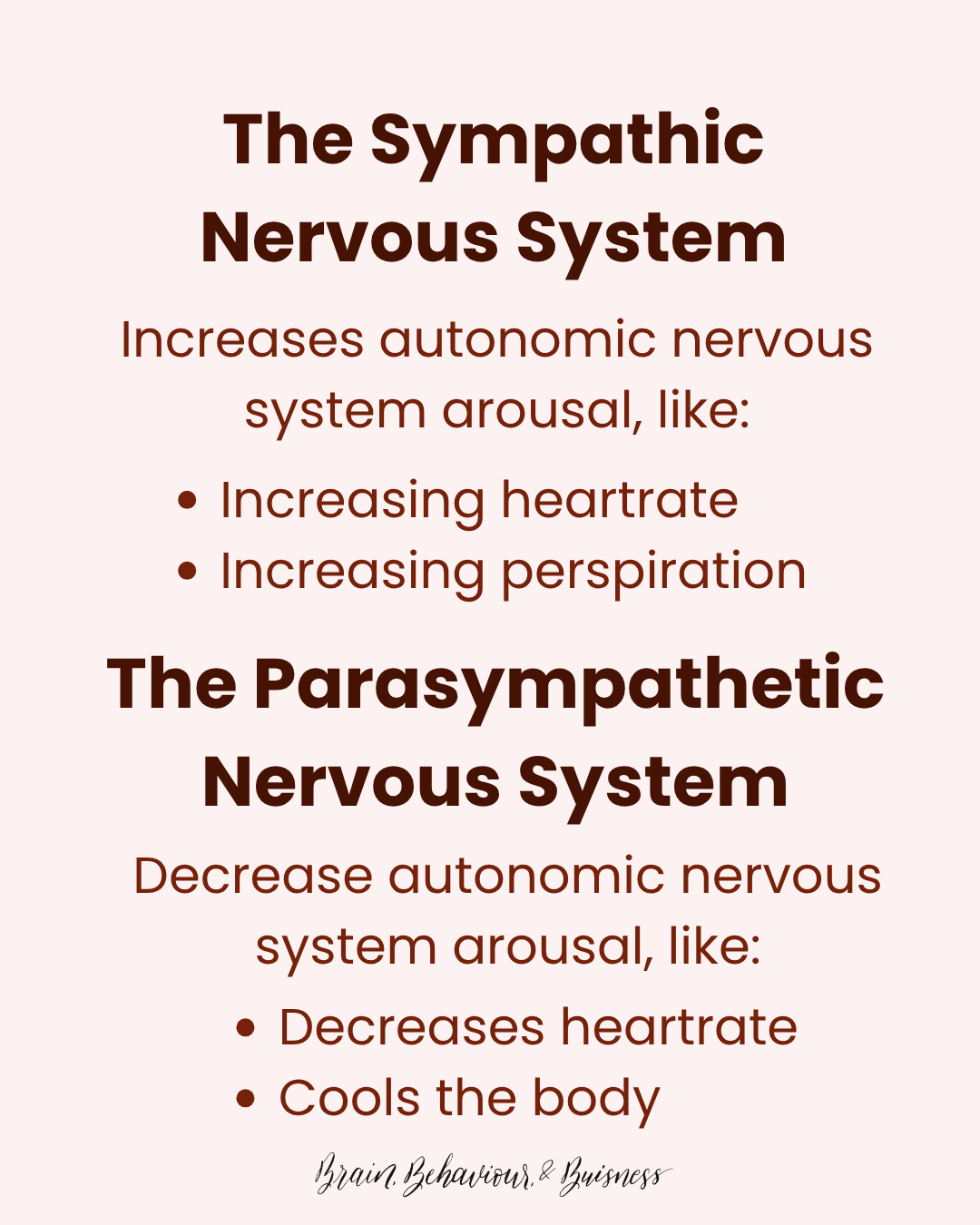
Despite what the term sympathetic might make you thinking, this system if anything but. In fact, it’s the system in this dyad that’s responsible for increasing nervous system arousal. This system includes body changes like increases in heart rate and therefore blood pressure, sweating, blushing, etc. It also is the system responsible for the fight or flight response.

The Parasympathetic Nervous System
This is functionally the correction system for after Sympathetic Nervous System activation. It will do things like cool your body off or lower your heartrate.

What nervous system dysregulation actually is
You’ll have noticed something interesting about the nervous system. It actually regulates itself, without conscious input. In fact, it controls and stabilizes bodily functions without conscious, or intentional and aware, input.
In fact, if you look closely at the Autonomic Nervous System, it does this inherently and completely automatically.
Your brain is literally designed to regulate itself.
Your brain is literally designed to regulate itself.
Even your neurons, the cells of the Central Nervous System regulate themselves. To simply describe an electrical and chemical process that’s more complex than the point here, a neuron starts at rest, becomes activated, a negative charge, then becomes deactivated a positive charge, then returns to rest. So it reacts, corrects itself, and returns to rest in approximately 5 milliseconds. After a neuron is activated, it rests for a while, called the refractory period, before it can be activated again. Balance. Or regulation.
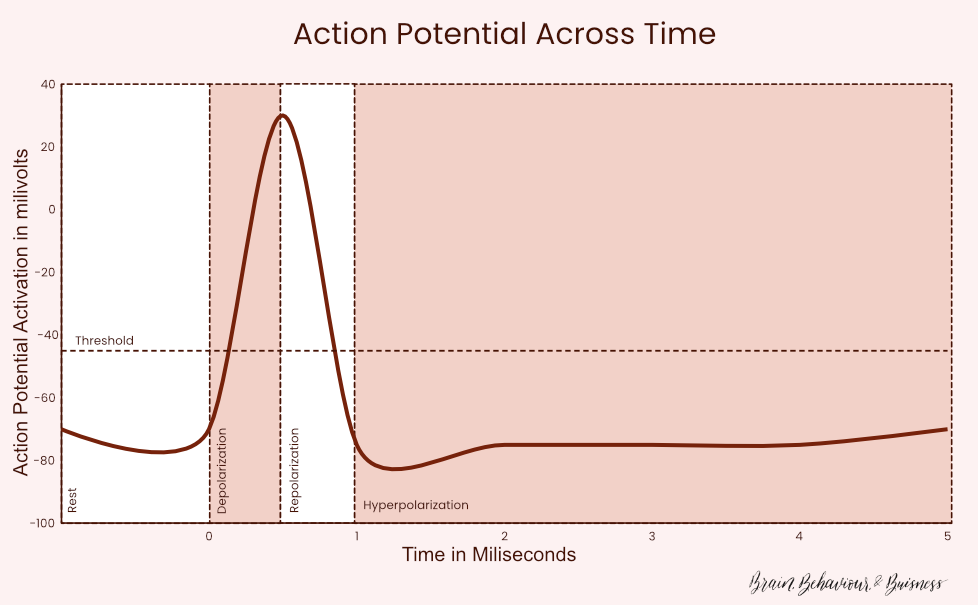
P.S. This graph makes one slight distortion. You can see a slight uptick in the line on both ends. This is not accurate, and would realistically be completely straight. This is just an unfortunate side effect of getting the right curve over the depolarization/repolarization period.
Modern neuroscience functions off the the assumption of cognitive uniformity. It’s the assumption, that’s well supported over decades of research, that everyone’s brain is the same. Yes, there are some differences in the cases of brain injury, but even then all brains are virtually identical. Also, yes, some people have trained themselves to have very niche and specific skills, but their brains are still fundamentally the same.
Cognitive uniformity is the assumption, that’s well supported over decades of research, that everyone’s brain is the same.
There are, of course disorders that are exceptions to the nervous system regulates itself argument. These are called neurological disorders. One common example is epileptic seizures which involve abnormal behaviour of the electrical activity of the Central Nervous System.
If your nervous system is truly not regulated, you need a neurologist, not a therapist, neuroscientist, or self-help content.
That’s way, way, way, out of our scope in psychology.

What you’re getting right by looking at nervous system regulation content
The nervous system, in absence of neurological disorders, regulates itself. But being attracted to content that talks about nervous system regulation is actually a good sign.
That means that you’re past the ‘ need to fix myself’ stage. Which is great, because there’s nothing actually wrong with you. You’re past seeing yourself as problem and you’re looking to what you can actively do to make positive changes.
This is productive mindset, just the wrong kind of content.

A better approach
I’m sure you’re still thinking, okay, the nervous system regulates itself, I’m still stressed out, anxious, feeling unsafe, or whatever other state your not liking. And you’re correct, I haven’t address what’s actually going.
I’m sure you’re still thinking, okay, the nervous system regulates itself, I’m still stressed out, anxious, feeling unsafe, or whatever other state your not liking. And you’re correct, I haven’t address what’s actually going.
You’re actually looking for support in one of two other areas. The first being emotional regulation or more broadly emotional intelligence. In this case, you’re getting a stimuli through your Peripheral Nervous System and your Central Nervous System is processing that information in a way you don’t like. Consciously, you don’t like way you react. The Nervous System is actually still doing it’s job in this case, it’s not dysregulated or malfunctioning. It’s much more likely that you haven’t been exposed to emotional regulation skills or that your environment/life experience has taught you to react in a certain way. Like feeling scared if someone raises their voice, even though they’re just cheering their team on. At some point you learned to fear yelling.
Alternatively, you have an inhibition problem. Behavioural inhibition is when we stop ourselves from doing something. It’s often used when we stop doing something we don’t want to stop in order to do something else. Like stop watching TV to go make food. It can also be used to control our behaviour so that it is socially appropriate. Like biting our tongue so we don’t say something hurtful. It can also connect to the emotional regulation piece, in that you may have to inhibit a behaviour that comes from an emotional state, that you don’t want to do.
Again, in neither of these situations if your nervous system working improperly. In fact, none of this is inherently indicating a problem of any sort. This is about knowing how you react to reaction stimuli and knowing you don’t like and wanting to change it. Anyone can develop these stimuli-response pairings in ways we don’t like.
You can train yourself to overcome these reactions consciously and effortfully. This means you have to take some responsibility on to make the change, which I realize from experience is annoying as hell. This is true even when we aren’t responsible for why we have this maladaptive stimuli-response parings, unfortunately.
Everyone is running the same hardware, in the form of the brain. We know for a fact that we can retrain ourselves. We do this all the time, including you and I.
I have two thoughts on how to progress from here.
The first, is identifying what the stimuli is. Often, we’re upset and we don’t know why exactly. When you do figure it out, it can helpful to think about why that pairing exists. Like maybe you hate yelling because of your elementary school teacher that yelled at you a lot. Then you have to very deliberately and consistently force yourself to have the reaction you want, until it becomes stimulus-response pairing.
The second piece that I recommend is getting a better grip on how you spend your mental energy. Sometimes when we react in ways we don’t like, it’s because we’re mentally too tired to make ourselves react the way we want. This is different than body fatigue. It’s much more connected to feeling overwhelmed, having troubles thinking, or even what you might refer to as the mental load. I have a completely free manual on how to manage this mental energy, including a step-by-step process to help you work through it. All you have to do is subscribe to get it. I’ve mentioned it second, but this piece of progress advice is easy to get started on and see results with today.
If you’re interested in learning the truth about how the human brain works and how it can make every aspect of your life easier, subscribe to get new essays weekly.
If you have any questions about the nervous system, emotional regulation, behaviour inhibition, or mental energy comment below or email me at research@emiliemoellenbeck.ca
I’d also love to hear from you anything that you learned or found interesting in this essay or if there are any other topics you’d like me to cover.



